1150 NW Maynard Rd · Cary, NC

Airway & Oral Function · Cary & Raleigh, NC
Professional tongue-tie care focused on comfort, precision, and long-term oral health.






If you imagined that “tongue-tie” is just another expression in the English language alluding to an inability to speak, you are mistaken. Tongue-tie is a malformation with serious repercussions if left unattended. Discover more about tongue-tie treatment in Cary and Raleigh in the following paragraphs.
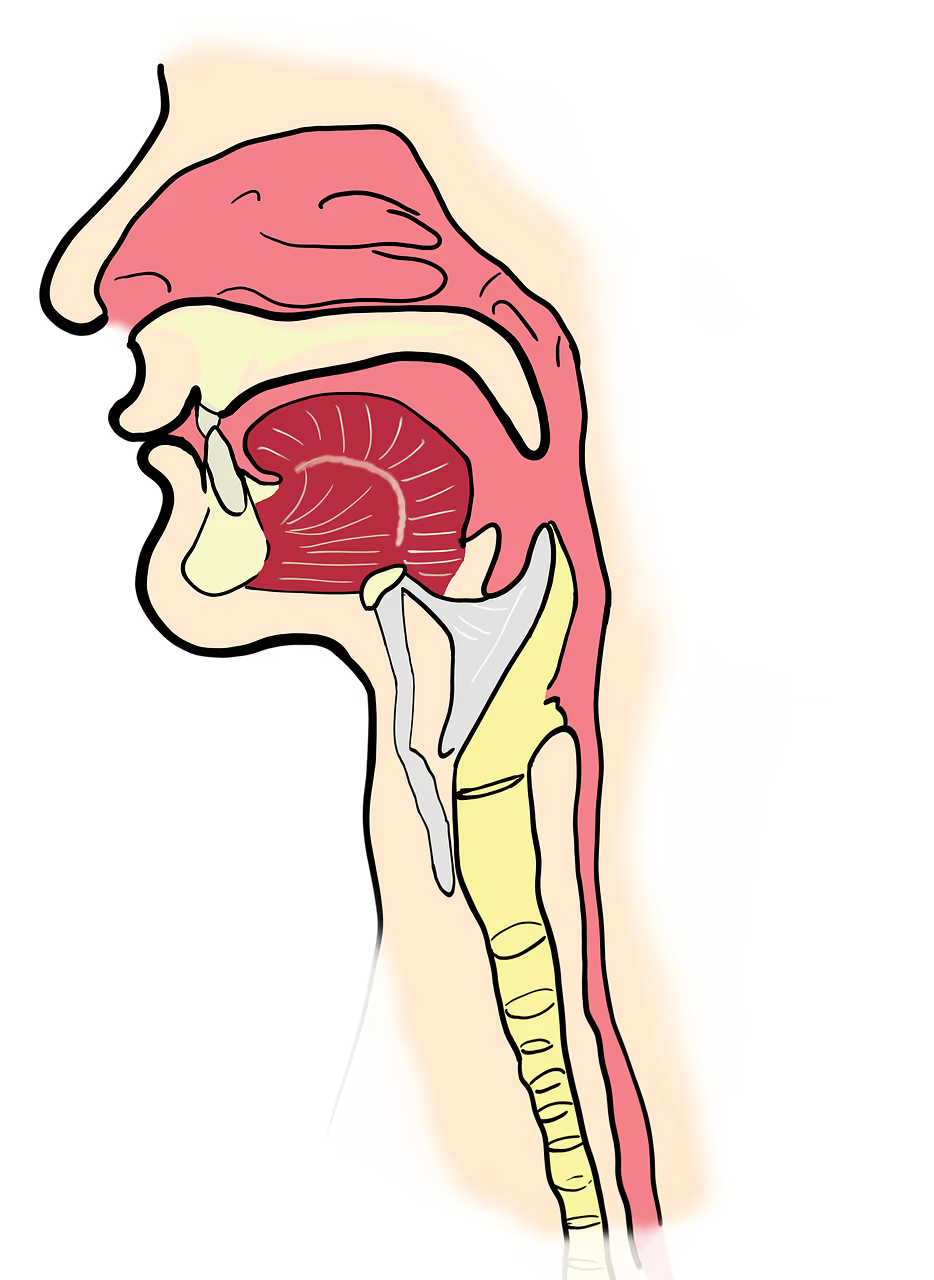
Tongue-tie is a congenital disorder wherein a child’s tongue remains attached to the lower part of the mouth. This is because the thin tissue connecting the tongue with the lower part of the mouth is shorter than normal. This congenital disorder inhibits tongue mobility and can cause speech impairments and difficulties with breastfeeding.
When an embryo is growing and developing inside the womb, the tongue fuses with the bottom of the mouth. With time, the tongue separates from the bottom of the mouth. A thin cord of tissue called the frenulum joins the tongue to the lower part of the mouth. In children with tongue-tie, the receding of the frenulum does not happen as expected, so it remains short and restrictive. This can cause difficulty in tongue movement and some children may have problems with articulation.
Ankyloglossia (tongue-tie) symptoms can range from mild to severe and may be described in categories based on where the tie is fused with the tongue. In some cases, tongue-tie is so mild that it does not cause any major problem.
In a newborn
You may find the following tongue-tie symptoms in a newborn:
In older children
The following tongue-tie symptoms can be observed in older children:
Tongue-tie (ankyloglossia) in some children is not severe and may not have noticeable symptoms. No treatment is needed if the child does not have problems speaking, swallowing, or eating. If the problem is mild to severe, the clinician may advise a minor surgical procedure.
One treatment option for tongue-tie is a procedure called a frenectomy. Dr Charles Ferzli at Smiles of Cary can carry out this minimally invasive procedure to release the restrictive band of tissue. Tongue-tie surgery in Cary and Raleigh NC helps by removing or releasing the tissue that limits tongue movement. This is typically a straightforward procedure that can be carried out using local anaesthesia.
The procedure is often well tolerated in newborns. Older children may require local anaesthesia and, in some cases, pain relief afterwards. Many infants or children improve naturally, but in severe cases, timely diagnosis and treatment are advisable.
Sucking exercises can help strengthen the tongue. In some cases, tongue-tie can improve on its own if the frenulum loosens over time. Otherwise, therapy or a minimal surgical procedure may be required for correction.

After surgery, you may be advised to attend a type of oral physical therapy called myofunctional therapy.
Myofunctional therapy may help with the following:
Very little preparation is needed for this treatment. The key is keeping your child calm and comfortable before tongue-tie treatment in Cary and Raleigh takes place. A numbing medication may be applied to help keep your baby comfortable. If a laser is used, your clinician will explain whether any additional medication is required. Infants do not retain memories in the way older children do, so the likelihood of lasting distress is reduced.
You may want to prepare a list of questions beforehand and discuss them with your clinician in Raleigh, NC.
Some questions you may want to ask before the procedure include:
Post-treatment pain relief
After treatment, follow any advice about pain relief carefully. Discomfort is usually mild. If your clinician in Raleigh, NC has not advised a pain reliever, you can ask what is appropriate to have on hand to keep your child comfortable.
If not addressed, tongue-tie can contribute to feeding difficulties, poor weight gain, speech impairments, and challenges with certain foods. Ankyloglossia can also lead to weak sucking patterns. Gentle techniques (such as cheek support during feeding) may be suggested, but relying on professional guidance is recommended.
Tongue-tie should be assessed by an appropriate clinician to determine whether tongue-tie treatment in Cary and Raleigh NC is needed. If you spot this issue in your child, consider consulting pediatric dentist Dr Charles Ferzli at Smiles of Cary. Dr Charles Ferzli’s dental services are available in Cary and Raleigh NC. For more information call us at (919) 646-6538 and schedule an appointment today for tongue-tie treatment.
A tongue tie occurs when the band of tissue connecting the tongue to the floor of the mouth is too short, tight, or restrictive. This can limit tongue movement and may affect feeding, speech development, oral function, breathing, and overall oral health.
A tongue tie release is a simple procedure that frees the restricted tissue under the tongue to improve mobility and function. Depending on the patient’s needs, the treatment may be performed using advanced laser technology or other techniques designed to minimize discomfort and promote healing.
Common signs of an infant tongue tie may include difficulty breastfeeding, poor latch, prolonged feeding times, clicking sounds while feeding, poor weight gain, or frustration during nursing. An evaluation can help determine whether a tongue tie is contributing to these challenges.
Yes. Adult tongue tie can contribute to speech difficulties, swallowing problems, jaw tension, TMJ symptoms, mouth breathing, sleep-disordered breathing, and oral discomfort. Many adults experience improved tongue function and quality of life following treatment.
A tongue tie procedure, sometimes referred to as an operation for tongue tie, typically involves releasing the restrictive tissue beneath the tongue. The procedure is generally quick, and many patients return to normal activities shortly afterward. Your provider will discuss the most appropriate treatment approach based on your specific needs.
A frenectomy tongue tie procedure is the removal or release of the restrictive frenum tissue that limits tongue movement. This treatment is often recommended for infants, children, and adults experiencing functional issues related to tongue restriction.
When searching for a tongue tie dentist near me, look for a provider experienced in evaluating oral function, airway health, feeding concerns, speech development, and tongue tie treatment. A comprehensive assessment can help determine whether a tongue tie release is appropriate for you or your child.
No. While infant tongue tie is commonly diagnosed during breastfeeding evaluations, children, teens, and adults can also benefit from treatment. Many patients are not diagnosed until later in life when symptoms related to speech, breathing, TMJ dysfunction, or oral function become more noticeable.



